Shopping cart
Your cart empty!

Managing your finances can be tough, but you can do it. You just need the right tools and knowledge. Year-end accounting is key for small business owners. Doing it yourself can save money and help you understand your business better.
We’ll show you how to handle year-end accounting on your own. You’ll learn about the importance of it, the tools you need, and how to get your records ready. With these tips, you can manage your business’s money well.
Year-end accounting is very important for small business owners. It helps you see how your business did and plan for the future. By doing your own accounting, you can make better choices for your business. It’s key for growing your business over time.
As a small business owner, knowing about year-end accounting is key. It helps you see how your business did and plan for the future. Year-end reports give a full picture of your business’s money health. This lets you spot what needs work and make your financial reports better.
Getting your own finances in order can save you money and time. It lets you manage your business’s money better. Some good things about doing this include:
But, doing your own accounting can be hard. You might not know enough or have too much to do. To get around these problems, you can use accounting software, get help from experts, and stay on top of things all year. By focusing on year-end accounting, you help your business grow and stay strong.
Understanding year-end accounting and managing your finances well helps you make smart choices for your business. Always stay organized, ask for help when you need it, and focus on making your financial reports and tax prep work well. This way, your year-end accounting will be a success.
Managing your money well needs the right tools and software. For diy accounting, QuickBooks, Xero, or Wave are great. They help with invoicing, tracking expenses, and making reports.
These tools make managing your money easier. They help you make financial statements for your small business. This is very helpful for tracking money and making smart business choices.
Using these tools makes managing money simpler. This lets you focus on growing your business.
To make year-end review smooth, organize your finances well. Create a checklist for year-end accounting. This helps you stay on track.
Organizing receipts and invoices is key. It makes it easier to check your bank statements and see what you owe.
For small business tax prep, being accurate is key. Follow some self-employed accounting tips. Start by collecting all your financial papers, like receipts and invoices.
Then, use these papers to check your bank statements and see what you owe.
Here are some steps for a good year-end review:
By following these steps and using a year-end accounting checklist, you can keep your finances in order. This makes you ready for small business tax prep. Don’t forget to use self-employed accounting tips too.
As a small business owner, making financial statements is key for year-end financial reporting. You need to prepare your balance sheet, income statement, and cash flow statement. Start by collecting all your financial data, like receipts, invoices, and bank statements.
The balance sheet is important. It shows your business’s financial state at a certain time. Then, make your income statement. It lists your business’s income and expenses over time. Lastly, create your cash flow statement. It shows how money moves in and out of your business over time.
By following these steps, you can make sure your financial statements are right. This helps your year-end financial reporting be accurate and useful. It gives you important info about your business’s money health and standing.
Creating accurate small business financial statements is key for year-end accounting. The balance sheet is a big part of this. It shows your business’s financial state at a certain time. You need to know about assets, liabilities, and owner’s equity to get it right.
It’s important to check your assets and liabilities for a balanced balance sheet. This includes cash, accounts receivable, inventory, and accounts payable. Accurate accounting of these helps keep your balance sheet up-to-date. This is crucial for DIY accounting and year-end accounting checklist.
Owner’s equity shows how much of the business you own. To find it, subtract total liabilities from total assets. This gives you a clear view of your business’s health. It helps you make smart choices.
By following these steps and avoiding common mistakes, you can make accurate financial statements. Regularly check and update your balance sheet. This keeps it accurate and shows your business’s current financial state.
| Component | Description |
|---|---|
| Assets | Cash, accounts receivable, inventory |
| Liabilities | Accounts payable, loans |
| Owner’s Equity | Ownership interest in the business |
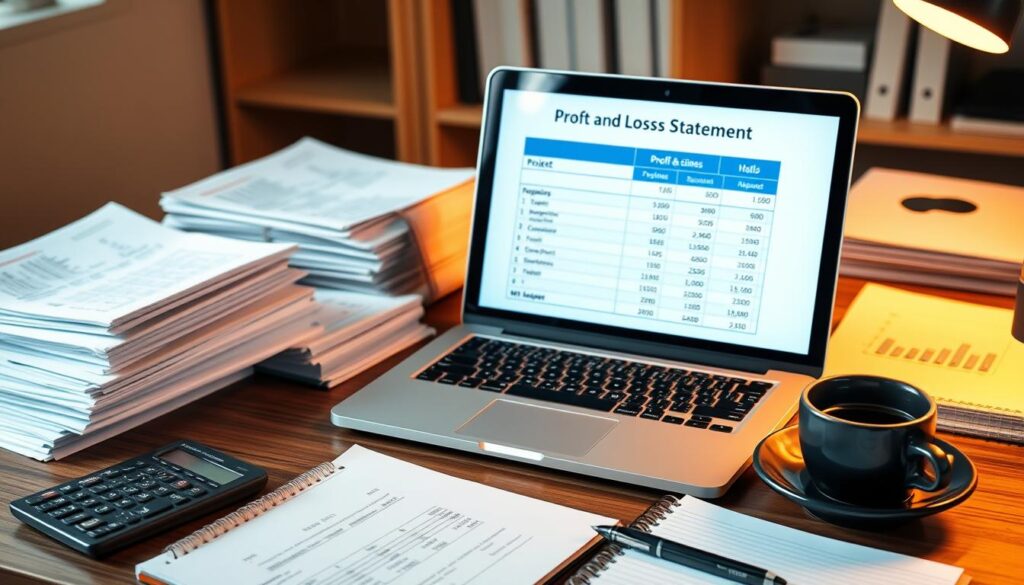
For small business owners, the profit and loss statement is key. It shows your business’s income and costs over time. To make this statement, list your income and then your expenses.
Preparing for taxes is easier with accurate financial reports. Your profit and loss statement helps figure out your net income. It shows if your business is making money.
Here’s how to make your profit and loss statement:
By following these steps, you can make smart choices for your business. You’ll be ready for year-end reports and tax time.
| Revenue Type | Amount |
|---|---|
| Sales | $100,000 |
| Services | $50,000 |
| Other Income | $20,000 |
As a small business owner, managing your money well is key. The cash flow statement shows how money moves in and out. It’s very important for year-end accounting and making smart business choices. DIY accounting helps you manage your finances, but knowing the basics is crucial.
To understand your cash flow statement, look at three main parts: operating, investment, and financing activities.
This part shows money coming in and going out from sales and services. By checking this, you can spot ways to better your cash flow. You might need to change your prices or how you get paid.
Investment activities cover money from buying equipment and property. Financing activities deal with loans, paying off debt, and owner’s equity. Looking at these helps you find ways to improve your cash flow and make smart choices.
By getting to know your cash flow statement, you can learn a lot about your business’s health. With the right DIY tools, you can manage your finances well. This helps you reach your business goals.
Being self-employed can make managing money and taxes hard. But, with the right small business tax preparation tips, you can use all the deductions and credits you can. A year-end accounting checklist is key to staying organized.
Keeping good records of your income and expenses is crucial. This makes filling out tax forms easier and helps you not miss out on deductions. You can use accounting software or get help from a financial advisor.
By following these self-employed accounting tips and keeping up with your small business tax preparation, you can lower your stress. Remember to use a year-end accounting checklist to stay organized.
As a small business owner, managing your inventory well is key for year-end accounting. DIY accounting helps you keep track of money. But, knowing about physical counts and how to value them is vital.
Year-end accounting for small businesses is more than just balancing books. It’s about making smart choices to grow your business. A physical count of inventory makes sure your financial records are right and current.
Small businesses have many ways to value inventory. The FIFO method says the oldest items are sold first. The LIFO method says the newest items are sold first. Keeping good records is key to following these methods right and meeting accounting rules.
By following these tips and picking the right valuation methods, small businesses can make sure their year-end accounting is correct and works well. DIY accounting lets you manage your money and make smart choices for your business.
| Valuation Method | Description |
|---|---|
| FIFO | Assumes that the oldest items in inventory are sold first |
| LIFO | Assumes that the most recent items are sold first |
Keeping your financial records accurate and efficient is key for your business’s success. Using the right accounting software is important. It helps manage your small business financial statements well. Look for software that makes invoicing, tracking expenses, and reporting easy.
Having a good digital record-keeping system helps you quickly find and check your financial records. This makes it easier to get ready for year-end accounting checklist tasks. Start by setting up a chart of accounts and training your team. This way, everyone knows how to use the system.
Some benefits of digital record-keeping include:
By following these best practices, you can make your diy accounting easier. You’ll reduce mistakes and make better decisions for your business. Always check and update your system to fit your business’s changing needs.
Mastering year-end accounting is a big step for small business owners. It lets you control your finances and make smart choices. This helps your business grow.
When you do your own accounting, you learn a lot. You can understand your balance sheet, profit and loss, and cash flow. These skills are very useful.
Stay organized and use the right tools for your accounting. Keep getting better at managing your money. With effort, you can handle year-end accounting well. This will help your business succeed for a long time.
DIY accounting gives you power over your business. It helps you manage your finances well. This way, your business can grow and do well.
Year-end accounting is key for small businesses. It lets them check their finances, find ways to get better, and plan for the next year.
DIY accounting saves money and time for small business owners. It helps them manage their finances better, cut costs, and see everything clearly.
DIY accounting can be hard because of lack of skill and too much work. But, using software, getting help from pros, and staying organized can help.
For DIY financial management, you need tools like QuickBooks, Xero, and Wave. Also, Microsoft Excel is great for tracking money and making reports.
To get ready for year-end, organize your papers, check your bank statements, and track payments. This makes sure your records are right and current.
To make year-end statements, start with the balance sheet, income statement, and cash flow statement. These show your business’s financial health and success.
Mastering the balance sheet means checking your assets and debts, figuring out your equity, and avoiding mistakes. This keeps your info accurate and up-to-date.
A profit and loss statement needs to show your income, expenses, and net income. This shows if your business is making money.
To get the most from cash flow statements, look at your money coming in and going out. Use forecasts to keep your finances healthy.
Self-employed folks should collect all their financial papers, figure out their business income and costs, and fill out their tax forms. This helps them use all the deductions and credits they can.
To manage your inventory well, do a count, follow good practices, and use the right methods to value it. This shows your inventory’s true worth.
For digital records, pick the right software, set up a good system, and keep your records accurate and current. This keeps your business organized and on track.