
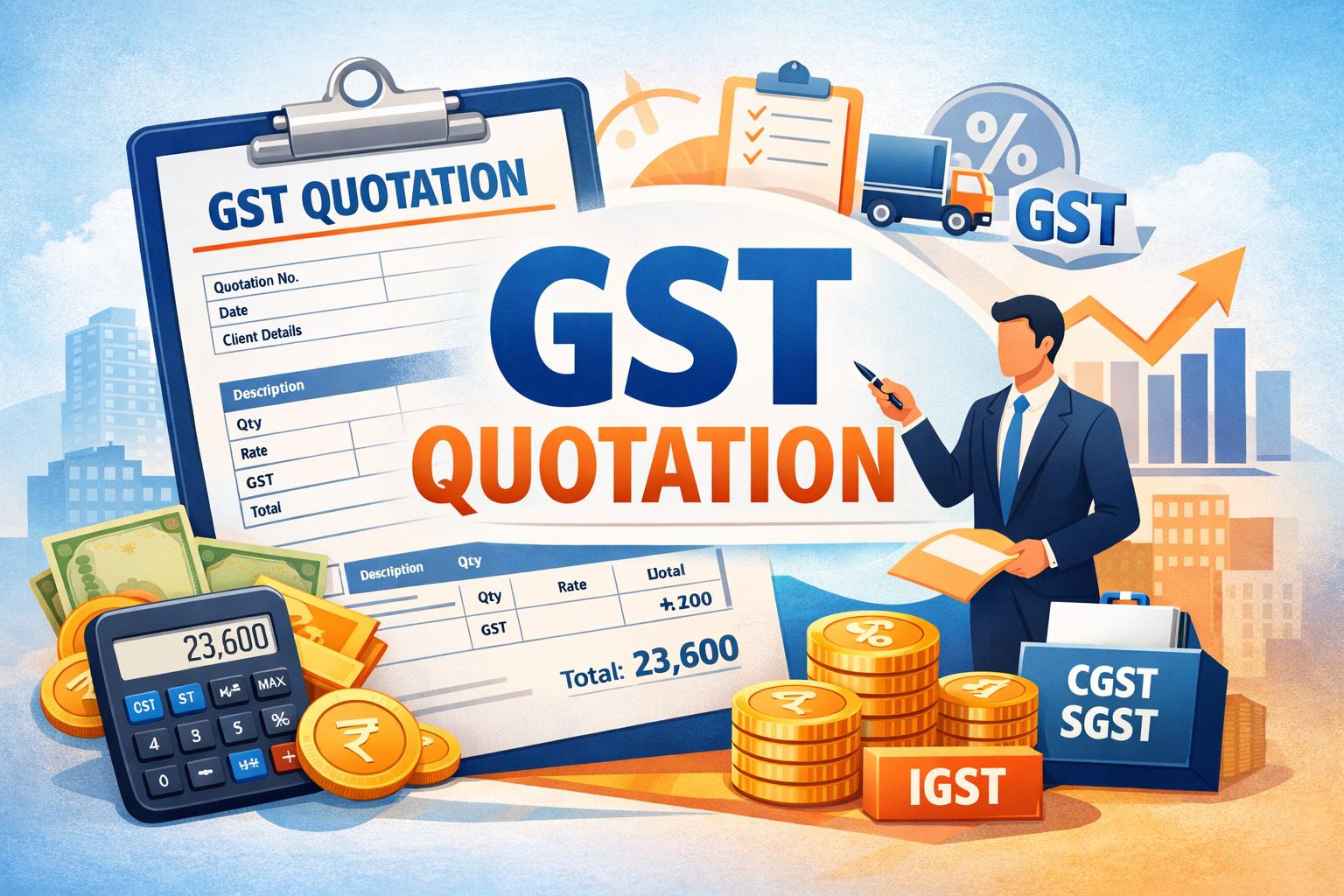
In today’s business environment, especially in countries like India where the Goods and Services Tax (GST) system is implemented, issuing a proper GST quotation has become an essential part of professional transactions. Whether you are running a small trading firm, a service-based company, or a large enterprise, understanding how to prepare and use a GST quotation correctly helps ensure transparency, compliance, and trust with clients.
What is a GST Quotation?
A GST quotation is a formal document issued by a seller to a potential buyer that provides an estimate of the cost of goods or services, including applicable GST. It is shared before the actual sale takes place and helps the customer understand the pricing structure, tax components, and total payable amount.
Unlike a tax invoice, a GST quotation is not a legally binding tax document. It is an offer that outlines the proposed price and terms. Once the customer accepts the quotation and the transaction is completed, a GST invoice is issued.
Why is a GST Quotation Important?
A GST quotation plays a critical role in business operations for several reasons:
- Transparency in Pricing
It clearly separates the base price and GST amount, helping customers understand how the final price is calculated. - Professionalism
A well-structured quotation enhances your company’s professional image and builds credibility. - Compliance Awareness
By mentioning GST details such as GSTIN and tax rate, the business demonstrates compliance with tax regulations. - Decision-Making Support
Customers can compare quotations from different vendors and make informed decisions. - Reference for Future Invoicing
The accepted quotation often becomes the basis for generating the final GST invoice.
Key Components of a GST Quotation
A proper GST quotation should contain the following essential details:
1. Business Information
- Business name
- Address
- Contact details (phone and email)
- GSTIN (Goods and Services Tax Identification Number)
2. Quotation Details
- Quotation number (unique reference number)
- Date of issue
- Validity period (e.g., valid for 15 or 30 days)
3. Customer Information
- Customer name
- Address
- Contact details
- GSTIN (if the customer is registered under GST)
4. Description of Goods or Services
- Item or service name
- HSN (Harmonized System of Nomenclature) or SAC (Service Accounting Code), if applicable
- Quantity
- Unit price
- Total amount before tax
5. GST Details
- Applicable GST rate (e.g., 5%, 12%, 18%, 28%)
- CGST and SGST (for intra-state supply)
- IGST (for inter-state supply)
- Total GST amount
6. Total Payable Amount
- Subtotal (before GST)
- Total GST
- Grand total (including GST)
7. Terms and Conditions
- Payment terms (e.g., 50% advance, 50% after delivery)
- Delivery timeline
- Warranty or service terms
- Validity of the quotation
Example Structure of a GST Quotation
Below is a simplified example format:
ABC Traders
Address: Chennai, Tamil Nadu
GSTIN: 33ABCDE1234F1Z5
Quotation No: QT-2026-001
Date: 22-02-2026
Valid Until: 07-03-2026
Customer:
XYZ Enterprises
GSTIN: 33XYZAB1234K1Z7
| Description | Qty | Unit Price | Amount |
|---|---|---|---|
| Office Chairs | 10 | ₹2,000 | ₹20,000 |
Subtotal: ₹20,000
CGST (9%): ₹1,800
SGST (9%): ₹1,800
Total GST: ₹3,600
Grand Total: ₹23,600
Terms: Payment within 15 days. Delivery within 7 working days.
GST Quotation vs GST Invoice
Many business owners confuse a quotation with an invoice. However, they serve different purposes:
- Quotation: Issued before the sale; it is an offer.
- Invoice: Issued after the sale; it is a legal tax document used for GST filing and input tax credit claims.
A quotation does not create a tax liability, whereas an invoice does.
Best Practices for Preparing GST Quotations
- Use Accounting Software
Modern accounting tools automatically calculate GST and generate professional quotations. - Mention Validity Period Clearly
This protects you from price fluctuations and tax rate changes. - Ensure Correct GST Rate
Apply the appropriate GST rate based on the product or service category. - Include GSTIN Correctly
Incorrect GSTIN details can create compliance issues later. - Maintain Records
Keep copies of all issued quotations for reference and tracking.
Conclusion
A GST quotation is more than just a price estimate—it is a structured, transparent, and professional document that supports smooth business transactions. By clearly mentioning the base amount, GST rate, and total payable amount, it ensures clarity between buyer and seller. Properly prepared GST quotations not only enhance business credibility but also lay a strong foundation for accurate invoicing and tax compliance. For any business operating under the GST regime, mastering the preparation of GST quotations is a fundamental and valuable skill.
